AI Bridging Species and Shrinking Models: Today's AI Developments

From interspecies communication to hyper-efficient models, the AI world is buzzing with activity. Today’s headlines highlight both the ambitious reach and the practical advancements being made in the field. It’s a mix of wonder and utility as AI pushes boundaries on multiple fronts.
One of the most intriguing stories comes from Gizmodo, detailing Google’s collaboration with marine biologists to develop a large language model (LLM) aimed at deciphering dolphin communication. This ambitious project hopes to unlock the complexities of dolphin language, potentially paving the way for two-way communication. While the scientific community remains cautiously optimistic, the implications of successful interspecies communication are profound, raising ethical questions about our relationship with the animal kingdom.
AI Assistants Get Smarter, Dolphins Get a Voice: AI News for April 15, 2025
Today’s AI news highlights a significant push towards more integrated and capable AI assistants, alongside some fascinating applications of AI in scientific research. From advanced search capabilities within Google Workspace to decoding the complexities of dolphin communication, the AI landscape continues to expand in both utility and potential.

One of the biggest announcements comes from Anthropic, whose AI assistant Claude just gained what some are calling “superpowers”. According to VentureBeat, Claude can now autonomously search your entire Google Workspace. This “agentic” research capability promises faster results with enterprise-grade security, potentially giving OpenAI a run for its money in the knowledge worker space. This integration marks a significant step towards AI becoming deeply embedded in our daily work lives, acting as a proactive assistant rather than just a reactive tool.
AI in the News: Apple's Data Dive, Dolphin Communication, and AI for Eldercare
Today’s AI news features a fascinating mix of corporate strategy, scientific exploration, and ethical considerations. From Apple’s efforts to bolster its AI through user data analysis to Google’s attempt to decipher dolphin speech and the emergence of AI companions for the elderly, it’s a day that showcases both the immense potential and the complex questions surrounding AI.

Apple is making a significant move to improve its AI capabilities by analyzing user data directly on devices. This approach is designed to balance the need for better AI with Apple’s commitment to user privacy. By processing data locally, Apple aims to catch up with its AI rivals while minimizing the risks associated with centralized data collection. This strategy could set a new standard for how tech companies develop AI responsibly.
AI's Evolving Role: From Workplace Symbiosis to Authentic Praise
Today’s AI news touches on both the practical integration of AI into our daily lives and its potential impact on the human experience. From insights on workplace dynamics to tools designed to foster appreciation, AI’s influence continues to expand in unexpected ways.
According to Business Insider, Microsoft AI CEO Mustafa Suleyman envisions a future where workers develop “symbiotic” relationships with AI assistants. Suleyman advises young people to prepare for this shift, suggesting that AI will become an indispensable part of our workflows. This perspective highlights the growing importance of understanding and adapting to AI as a core skill for the next generation workforce.
AI's Shifting Sands: Microsoft's Vision, Apple's Internal Struggles, and Touchable Holograms
Today in AI, we’re seeing a blend of future-forward visions, internal corporate challenges, and tangible (literally!) advancements. From Microsoft’s CEO painting a picture of symbiotic AI relationships to reports of internal strife at Apple regarding AI investment, and even the emergence of touchable 3D holograms, it’s a day of diverse developments in the AI landscape.
AI's Rocky Road to Debugging, and the Price of Progress

Today’s AI news paints a mixed picture: one of limitations, potential privacy concerns, and surprising collaboration. From AI’s struggles with software debugging to the rollout of Microsoft’s controversial Recall feature, and Google’s unexpected alignment with OpenAI, it’s a day of contradictions and complexities in the world of artificial intelligence.
First up, let’s talk about AI’s coding woes. A new study highlighted in Ars Technica reveals that AI agents still aren’t reliable when it comes to debugging software, even with access to the right tools. While AI excels at generating code, the nuanced task of identifying and fixing errors remains a challenge. This suggests that the dream of fully autonomous AI programmers is still a ways off, and human expertise remains crucial in software development.
AI Adapts and Evolves: OpenAI and Google Embrace New Standards, Apple's Siri Faces Internal Challenges
Today in AI, we’re seeing a mix of adaptation, competition, and internal struggles that highlight the dynamic nature of this rapidly evolving field. From OpenAI and Google embracing new standards for AI model connectivity to reports of internal chaos surrounding Apple’s Siri, it’s a day of significant developments.

The big news today is that Google will adopt Anthropic’s standard for connecting AI models to data. This move comes shortly after OpenAI also announced its adoption of the same standard. This is significant because it suggests a growing consensus around interoperability and data access within the AI community. By embracing a common standard, these companies may be aiming to streamline the process of connecting AI models to the vast amounts of data they need to function effectively, potentially accelerating innovation.
AI Models Compose Music and Punctuate Debate: The Latest in AI
Today’s AI news highlights the increasing versatility of AI models in creative fields and the ongoing discussions surrounding AI’s impact on writing. From generating music to sparking debates about punctuation, AI continues to push boundaries and raise questions about its role in shaping our world.

Google’s enterprise cloud is now offering a music-generating AI model called Lyria through its Vertex AI platform, as reported by TechCrunch. This allows businesses to leverage AI for creating musical content, potentially opening up new avenues for advertising, entertainment, and even therapeutic applications. The availability of such a tool in the enterprise cloud signals a move towards democratizing AI-driven creativity, making it accessible to a wider range of users and industries.
AI's Next Chapter: Microsoft's Moves, Samsung's Smart Homes, and the Developer Dilemma
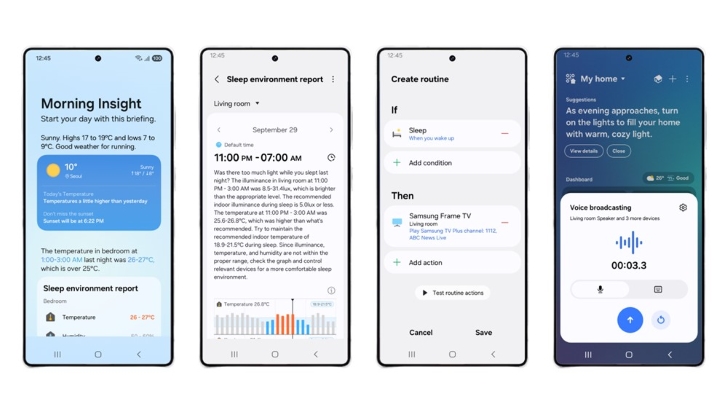
Today’s AI news paints a picture of a field in motion, from corporate strategies to developer sentiment. Microsoft is making waves with its AI ambitions, Samsung is weaving AI deeper into the fabric of our homes, and a critical look reveals the challenges faced by developers dealing with the push for AI integration.
The biggest story today is perhaps Microsoft’s evolving AI strategy. As Windows Central reports, Microsoft AI head Mustafa Suleyman confirmed the development of its “off-frontier” AI models. This suggests a move towards greater independence from OpenAI, though Suleyman tempers expectations by stating they aim to be a “very tight second,” lagging behind OpenAI by about 3-6 months. It will be interesting to watch how Microsoft balances its partnership with OpenAI against its own internal AI development.
Microsoft's AI Moves: From Quake II to "Tight Second" Strategy
Microsoft is making some interesting moves in the AI space today. From gaming to strategic positioning, the company’s AI initiatives are definitely grabbing attention.

First up, Microsoft has unveiled a playable “interactive space inspired by Quake II using AI.” The demo, powered by Microsoft’s recent advancements in AI, has sparked a vociferous debate online, according to IGN. It’s fascinating to see AI being used to reimagine classic gaming experiences, though the community seems to have mixed feelings.